A full suite of radiation detection and isotope identification systems for homeland security, nuclear power, environmental monitoring, and emergency response. Handheld detectors, RIIDs, search systems, and gamma spectrometers, built for speed, accuracy, and reliability in the field or the lab.
Find the source, identify the isotope, and decide what to do next. The line spans handheld identifiers, human-portable and vehicle search systems, personal and survey instruments, and laboratory-grade analyzers. Pick the form factor your mission needs.

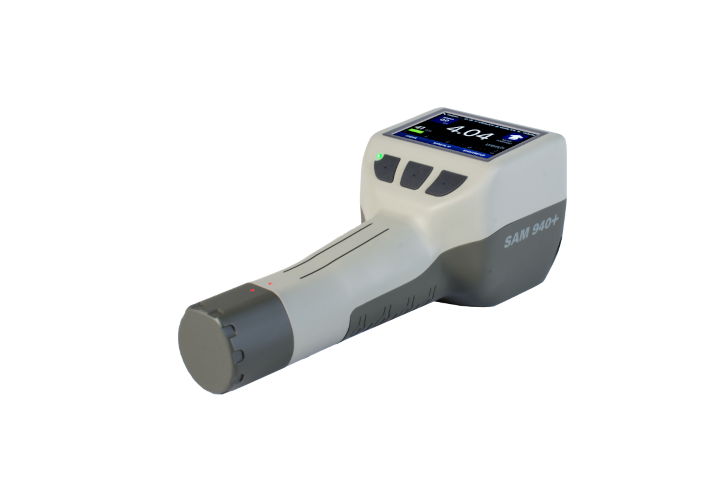
Single-hand radioisotope identifiers that classify a source into ANSI categories in the field. NaI, CeBr3, and lanthanum detectors, gamma and neutron channels, and a modern interface that guides the operator from alarm to answer.
View the SAM 940+ →
Human-portable and vehicle-mounted detection for wide-area search and screening. Large NaI volumes, GPS mapping, and wireless links turn a person on foot or a moving vehicle into a continuous radiation survey.
View the SAMpack 120 →
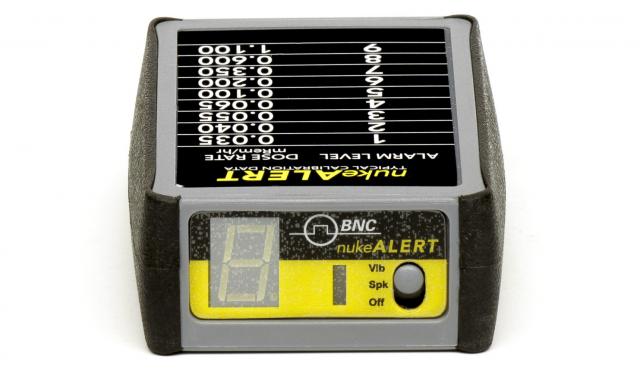
Pocket detectors, dosimeters, and survey meters for everyday radiation safety. Personal radiation detectors alert and locate, survey meters read alpha through gamma, and a hybrid wand pairs radiation with metal detection.
View the Model 951 →
Multichannel analyzers and a fixed monitoring system for spectroscopy and continuous watch. Pair the MCA with a NaI, CsI, CeBr, or LaBr detector, run field analysis software, or stand up an area monitor with plastic and NaI detection.
View the Model 970 MCA →Scintillators span NaI, CeBr3, LaBr, LBC, CsI, plastic, and Geiger-Mueller tubes, matched to the resolution and ruggedness each role needs.
Gamma identification across the line, with neutron detection on the SAM identifiers, search systems, and the PM1703GNA-II for SNM sensitivity.
On-board libraries sort sources into ANSI, SNM, IND, MED, and NORM categories, with custom and ITRAP options on select models.
The identifiers are designed against the ANSI N42 family of radiation detection standards. Specific model certifications: verify against the published datasheet.
Spectra and results export for reachback and adjudication workflows, including RadResponder-style sharing for secondary review.
SNAP-MCA and Spectroscopy Field Analysis software drive the Model 970 and Model 971 for laboratory-grade spectral work.
Each mission ships with an application brief covering the threat, the workflow, and the configuration that fits. Click for more or submit your application.
Interdiction and screening at ports, borders, and checkpoints, with SNM-grade neutron sensitivity and fast identification.
Emergency ResponseRapid identification for fire, EMS, and HazMat teams working an unknown source under time pressure.
Health PhysicsContamination control, health physics surveys, and outage support inside and around the plant.
IndustryOrphan-source detection and load screening for foundries, recyclers, and metal processors.
MaritimePort, vessel, and cargo screening, plus vehicle-mounted survey for harbor and littoral patrol.
EnvironmentalNORM surveys, contamination mapping, and long-term monitoring for environmental and remediation work.
Detector material, energy range, neutron sensitivity, and ruggedness all change the answer. This short guide from Berkeley Nucleonics walks through the questions that decide which identifier fits your mission, then points you at the model that matches.
Talk to a Berkeley Nucleonics engineer about the detector material, energy range, and form factor that fit your detection mission. Call 800-234-7858 or write info@berkeleynucleonics.com.
Get a quote or demo