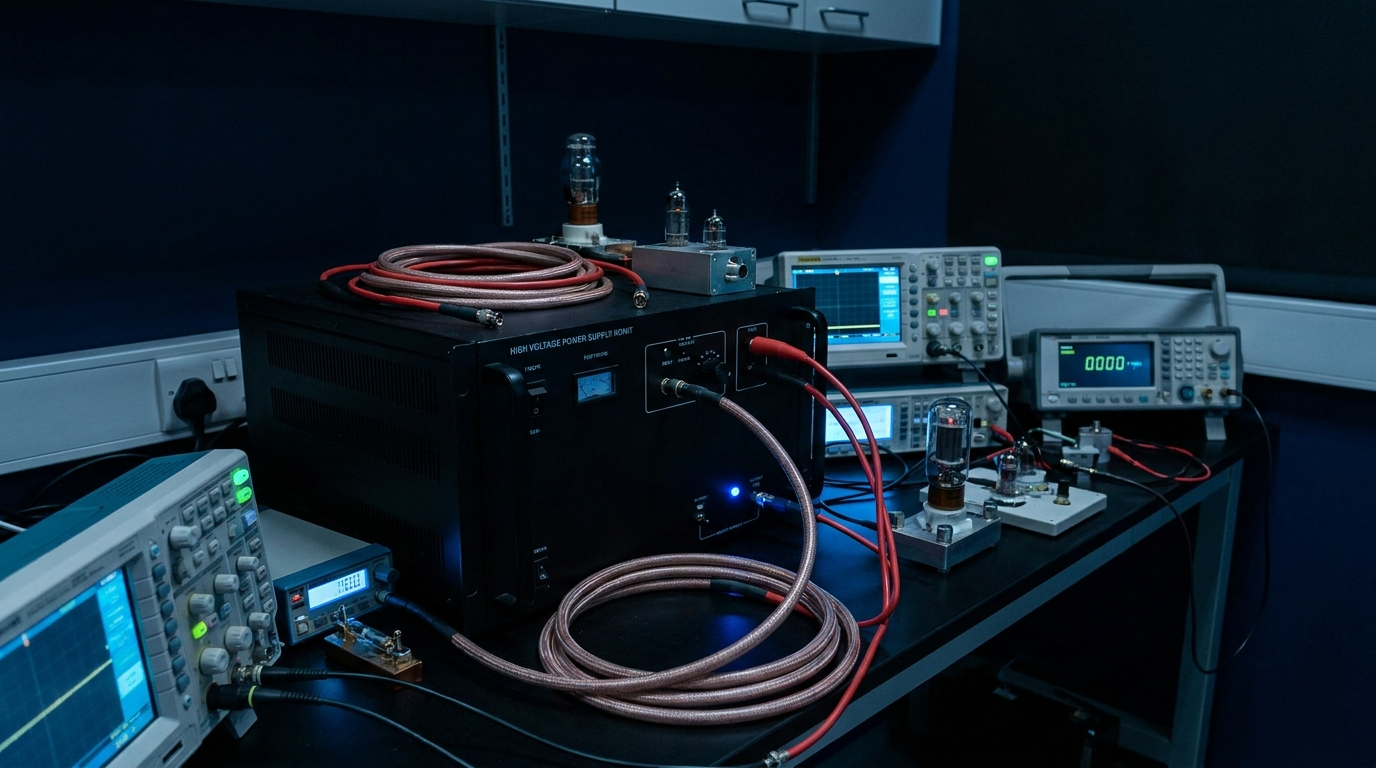
R&D & University HV Lab
A university or industrial research lab rarely runs a single experiment. The same bench supports a power-electronics study one week, a materials breakdown test the next, and a teaching session after that. A high-voltage supply purchased for one project quickly becomes the supply everyone reaches for. That breadth of use is exactly where most lab supplies disappoint, because they are built for one job and bolted to one polarity, one range, and one fixed way of working.
Research also runs on automation. A graduate student does not want to sit at a front panel turning a dial for a 12-hour sweep. The experiment needs to be scripted, stepped, and logged from a host computer, then re-run identically months later when a reviewer asks for the data again. A supply that cannot be driven from code is a supply that holds the work back.
Then there is the matter of grounding and polarity. Different experiments reference the load to ground in different ways. Some need a clean earth-referenced output that can be flipped positive or negative. Others, where neither terminal can sit at ground, need a floating, potential-free output. A lab that has to buy a separate instrument for each case wastes both budget and bench space.
How the BNC PVP-Series line solves it
The Berkeley Nucleonics PVP-Series is a fully digitally regulated DC high-voltage supply that was designed for exactly this kind of mixed-use lab. The voltage range spans the catalog from 1.5 kV up to 30 kV, so one product family covers low-voltage device work and high-field experiments alike. Power classes of 500 W, 2 kW, and 3 kW let a lab match the supply to the experiment rather than over-buying.
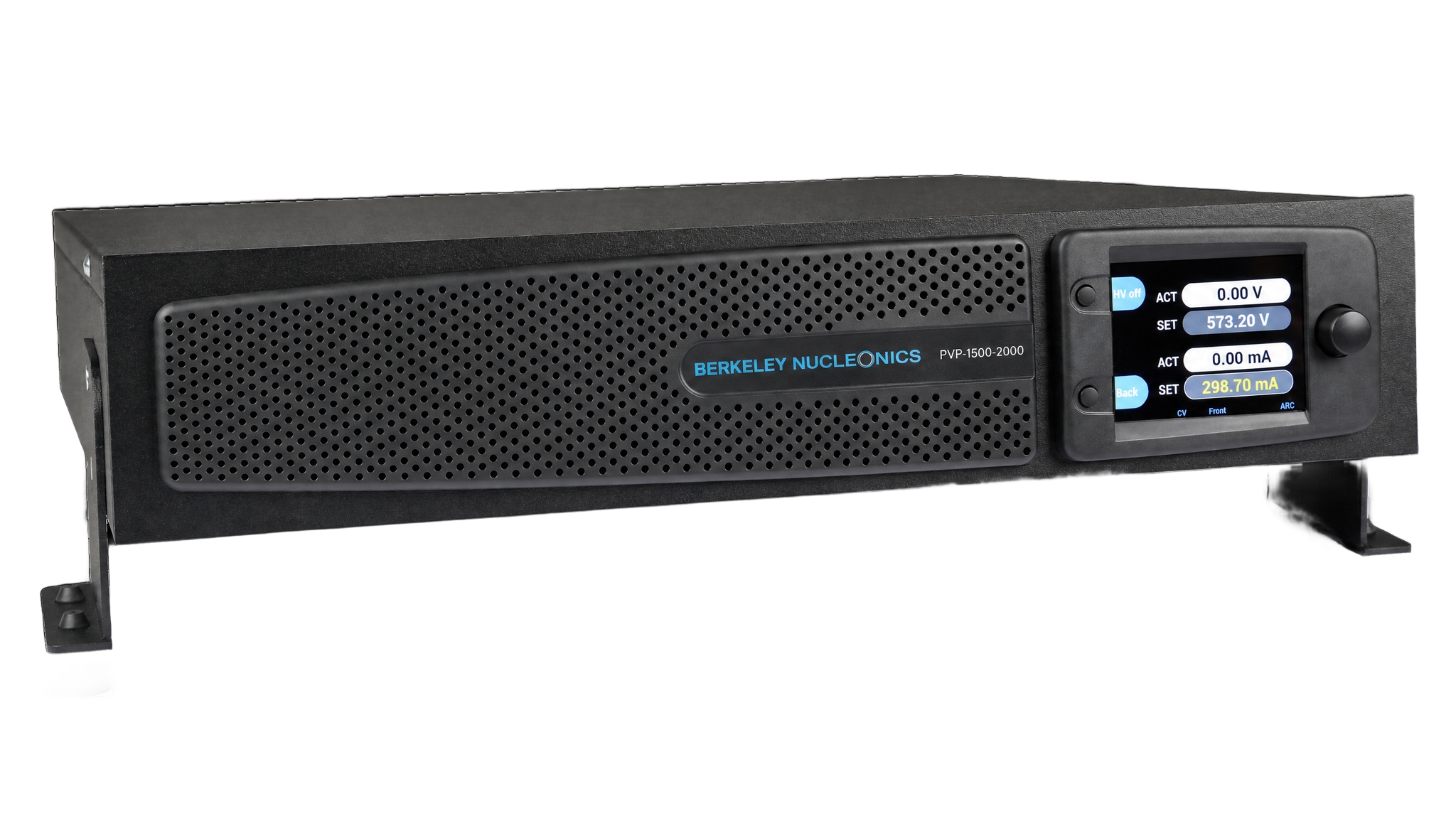
Control is where the line earns its place in research. Every unit carries on-board Ethernet and RS232 with a SCPI command set, so a student can drive it from Python, MATLAB, or LabVIEW and script a full voltage or current sweep without touching the front panel. For hands-on sessions the 3.5-inch color display with a three-button menu gives direct manual control, and the time-tagged error and event log captures what happened during a run. Configurable code protection lets a lab manager lock a safe operating envelope before students take the bench.
Flexibility extends to the output itself. Reversible-polarity models switch between positive and negative, earth-referenced operation in a single chassis, while floating models provide a potential-free output for experiments where neither terminal can be grounded. The wide-range single-phase AC input with active power-factor correction means the supply runs from an ordinary lab outlet, and the 19-inch rack or benchtop form factor fits whether the lab works from a rack or a tabletop.
Which PVP-Series models and options fit
Because research needs vary so widely, the model choice depends on the voltage and power the lab expects to use most. The table below maps common lab profiles to a sensible starting model.
| Lab profile | Recommended PVP-Series model | Output |
|---|---|---|
| General teaching and device work | PVP-1500-1400 | 1.5 kV, 1400 mA, reversible |
| Floating-output experiments | PVP-1500-2000 flo | 1.5 kV, 2000 mA, floating |
| Mid-range materials and breakdown | PVP-5000-600 | 5 kV, 600 mA, reversible |
| High-field and plasma research | PVP-10000-300 | 10 kV, 300 mA, reversible |
| Extended high-voltage studies | PVP-20000-25 / PVP-30000-17 | 20 / 30 kV, pos/neg |
Polarity is set by the part-number suffix: 1 for positive, 9 for negative, and 5 for reversible, so a reversible PVP-5000-600 orders as 00.210.144.5. The retrofittable options matter for research as well. Ramp control sets a defined rate of rise from 1 V/s up to ten times nominal volts per second, which protects sensitive samples and makes soft turn-on repeatable. Arc detection reports flashover events and can shut the output off, a useful safeguard when students run unfamiliar loads.
Recommended configuration
For a flexible teaching and research bench, a strong default is the reversible PVP-5000-600 (order ref 00.210.144.5). At 5 kV and 3 kW with both polarities in one chassis, it covers the majority of device, materials, and demonstration work, and it speaks SCPI over Ethernet so it slots straight into scripted experiments. Add the ramp-control option for controlled turn-on of sensitive samples and arc detection for student safety.
Labs that also need a potential-free output should add a floating model such as the PVP-1500-2000 flo (order ref 00.210.114.4) for experiments where neither terminal sits at ground. Where the research program reaches into higher fields, a PVP-10000-300 or a 20 to 30 kV unit extends the same digital control and interfaces to the top of the range. Every model shares the same command set, so a script written for one transfers to the others with little change.
For a quick question, chat with an engineer at berkeleynucleonics.com.