1Why Polarity Matters
Two supplies can carry the same voltage and current ratings and still be wrong for each other's jobs. The difference is how the output relates to earth ground. A high-voltage supply does not just produce a magnitude. It produces a magnitude with a reference, and that reference shapes how you wire the load, how you protect against faults, and where the danger lives.
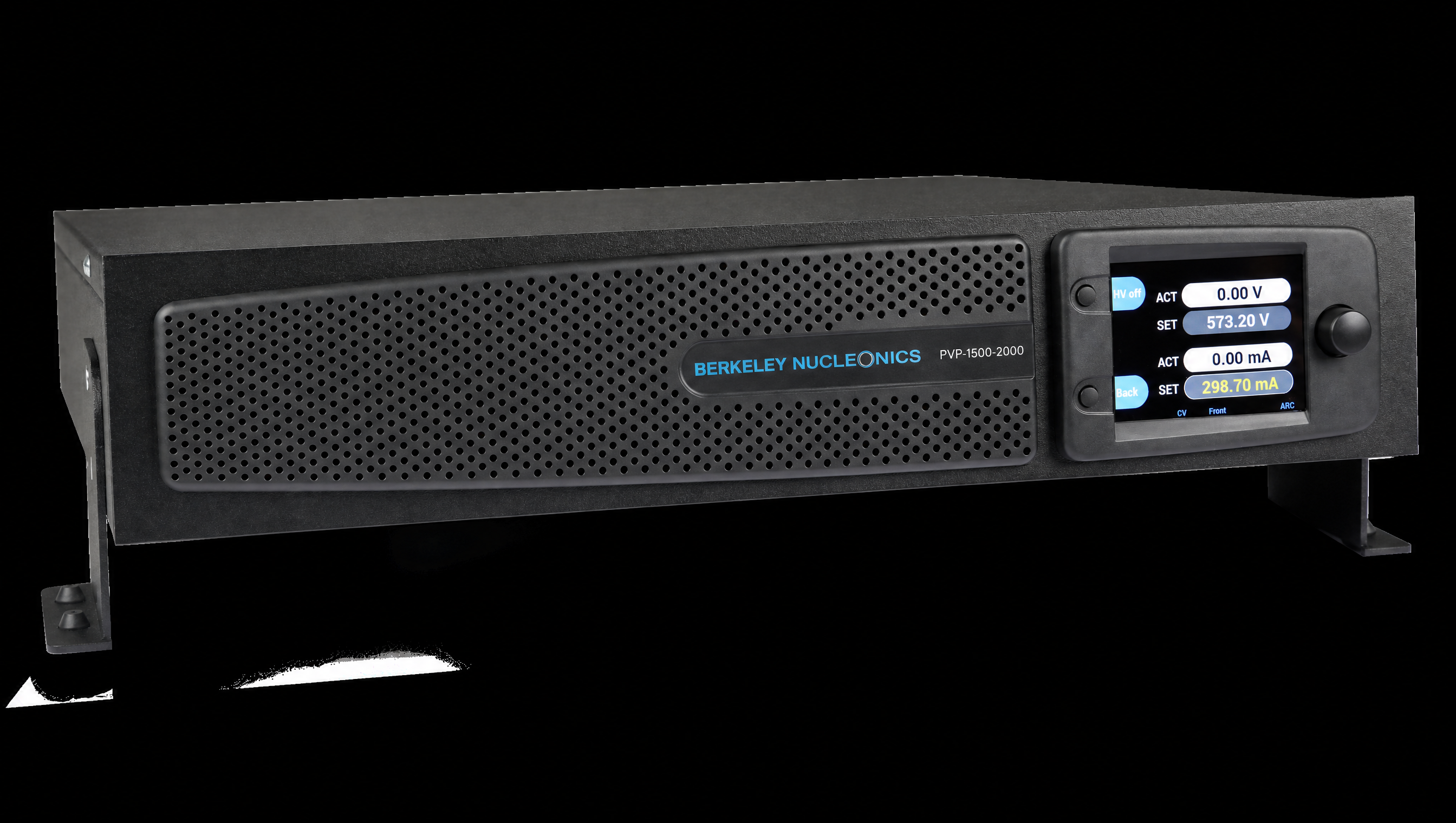
The PVP-Series offers four output styles: positive, negative, electrically reversible, and floating. The first three are earth-referenced. The fourth is potential-free. Choosing among them is one of the first decisions in any HV setup, and it is worth getting right before the supply arrives, because it is not something you can change with a setting on an earth-referenced unit.
2Earth-Referenced Output
An earth-referenced supply ties one of its output terminals to protective earth, usually the return terminal, and drives the other terminal above or below ground. A positive unit holds the return at ground and pushes the HV terminal to a positive potential. A negative unit does the same but pulls the HV terminal below ground. In both cases, one side of your load sits at earth potential, which is convenient and, for many setups, the safest arrangement.
The advantage is predictability. You always know that one terminal is at ground, so you know which conductor is the dangerous one and which is safe to touch when the supply is off and discharged. Fault current has a defined path back to earth, and the chassis, the rack, and the return share a common reference. For a single experiment that always uses the same polarity, an earth-referenced unit is usually the simplest correct answer.
Polarity choice also follows the physics of the load. Many devices care which way the field points. A photomultiplier expects a specific bias polarity on its photocathode. An ion source, an electron gun, and a deflection plate each define positive and negative by their geometry, not by convenience. Get the sign wrong and the device either does nothing or runs backward. So the positive-versus-negative decision is rarely arbitrary. It is set by the load, and the supply has to match it.
3Floating Output
A floating output isolates both terminals from earth. Neither the positive nor the negative terminal is tied to ground inside the supply. You decide the reference by where you connect the output in your own circuit. This lets you stack the supply on top of another potential, bias a stage that is not at ground, or insert the supply in series with a load that already has its own reference.
The flexibility comes with responsibility. Because neither terminal is automatically at a safe potential, both can sit at high voltage relative to earth depending on how you connect them. A floating supply does not relieve you of grounding discipline. It moves the grounding decision from the supply into your circuit, where you have to make it deliberately. The PVP-Series floating models, such as the PVP-1500-1400 flo and PVP-1500-2000 flo, are built for exactly the cases where that control is worth the added care.
A common reason to reach for a floating output is series stacking. If you need more voltage than one supply provides, you can place a floating unit on top of another source so the two add. The lower supply sets the reference, and the floating supply rides on it. The same idea covers a load that is biased to a high common-mode potential, where you want to apply a controlled voltage difference across a stage that as a whole sits far from ground. Neither arrangement is possible with a strictly earth-referenced supply, because tying one terminal to earth would short out the very offset you are trying to create.
4Side by Side
The clearest way to see the difference is to draw the two output styles next to each other and watch where ground connects.
5Reversible Polarity
A reversible PVP-Series unit is still earth-referenced, but it lets you switch which way the HV terminal swings, positive or negative, electrically and without rewiring. This is a workflow convenience for a bench that serves more than one experiment, or a test sequence that has to apply both polarities to the same device. Instead of stocking two supplies or physically reversing leads at high voltage, you change polarity through the control interface.
Reversible operation is not the same as floating. The output stays earth-referenced in both polarities. If your need is to stack or isolate the supply rather than to flip its sign, a floating model, not a reversible one, is the right tool.
6When to Use Each
| Output style | Use it when | Watch out for |
|---|---|---|
| Fixed positive or negative | One polarity, one terminal can sit at earth, simplest safe wiring | Cannot change sign later without a different unit |
| Reversible | Bench serves several experiments, or a sequence needs both signs | Still earth-referenced; not a substitute for floating |
| Floating (potential-free) | Supply must stack on another potential, bias a non-grounded stage, or sit in series | Both terminals may be live to earth; you own the grounding plan |
7Grounding and Safety
Grounding is where polarity choices become safety choices. With an earth-referenced supply, the protective earth path is defined for you, and the chassis bond carries fault current away from the operator. With a floating supply, you create that path. A floating output that is left truly unreferenced can drift to an unexpected potential, and a single insulation fault can put a terminal you assumed was safe at full voltage relative to earth.
Three practices apply regardless of output style. First, bond the chassis to protective earth through the supplied power connection and never defeat it. Second, plan the discharge path before energizing, and confirm zero potential with an appropriate HV probe before touching anything. The PVP-Series discharges its output in under 60 seconds at no load (type dependent), but stored energy in the load can persist longer. Third, for floating setups, document the intended reference point and the maximum potential each terminal can reach relative to earth, then verify it matches your insulation and clearance ratings.
8PVP-Series Options
The PVP-Series is built so the polarity decision maps directly to a part number. The suffix code carries the choice: 1 for positive, 9 for negative, and 5 for reversible. Floating models are designated flo and listed separately. Two retrofittable options support safe polarity work in either style. Ramp control raises and lowers the output on a defined gradient, from 1 V/s to 10 times nominal per second, so a sensitive load never sees a step when you energize or reverse. Arc detection reports flashover and can shut the output off, which is valuable when a stacked or floating arrangement raises the chance of an unexpected breakdown path.
Across all styles, the output uses a rear HV connector, the supply is digitally regulated by a microcontroller and FPGA, and control runs over Ethernet and RS232 with a SCPI command set. The polarity you pick changes the wiring and the safety plan, not the measurement quality.
9Talk to an Engineer
Polarity and grounding decisions are easier to make before the hardware ships than after. To talk through whether your setup wants a fixed, reversible, or floating output, and how to ground it safely, contact Berkeley Nucleonics at 800-234-7858 or info@berkeleynucleonics.com.
For a quick question, chat with an engineer at berkeleynucleonics.com.