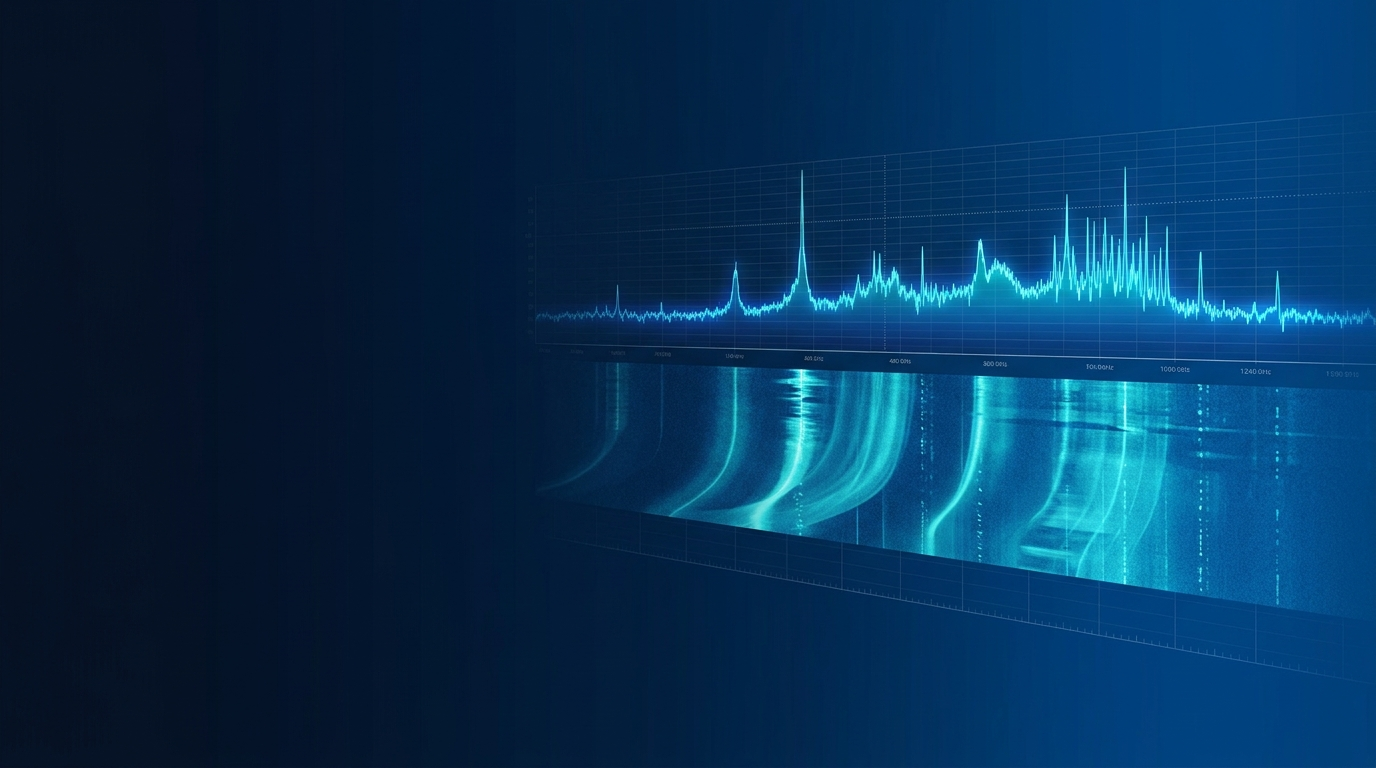
Wireless & 5G/6G System Validation
Modern wireless systems pack more bits into less spectrum every generation. Wi-Fi 7, dense IoT deployments, LTE, and 5G NR all lean on high-order modulation, wide channels, and tight timing. That delivers throughput, but it also means the margin for error is thin. A few dB of distortion, a stray spur, a timing slip on a transient, and the link quality collapses. The system passes most of the time, then drops a frame for reasons that do not show up in a static measurement.
The errors that cost teams the most are the intermittent ones. A fault that fires once in ten thousand frames will not reveal itself on a single capture. By the time a swept analyzer finishes one pass, the event is long gone, and the operator is left staring at a clean trace that hides a real problem. Reproducing the fault on demand is often impossible. You have to be watching the moment it happens, with enough bandwidth to see the whole channel and enough memory to keep the evidence.
So validation needs three things at once: enough analysis bandwidth to cover a wide channel in one shot, modulation analysis that reads error vector magnitude across the symbols, and a way to capture a transient fault so it can be studied after the fact. Static spectrum is the easy part. The hard part is catching the system at the instant it misbehaves.
How the ICX-FieldHawk line solves it
The ICX-FieldHawk receivers analyze in real time across wide channels, with up to 100 MHz of analysis bandwidth so a full 5G NR or Wi-Fi channel fits in a single capture rather than being stitched from sweeps. That matters for wideband modulation analysis, where the whole signal has to be seen at once to measure it honestly. The receiver tracks error vector magnitude as the signal runs, so a slow drift or a sudden degradation is visible as it develops, not after.
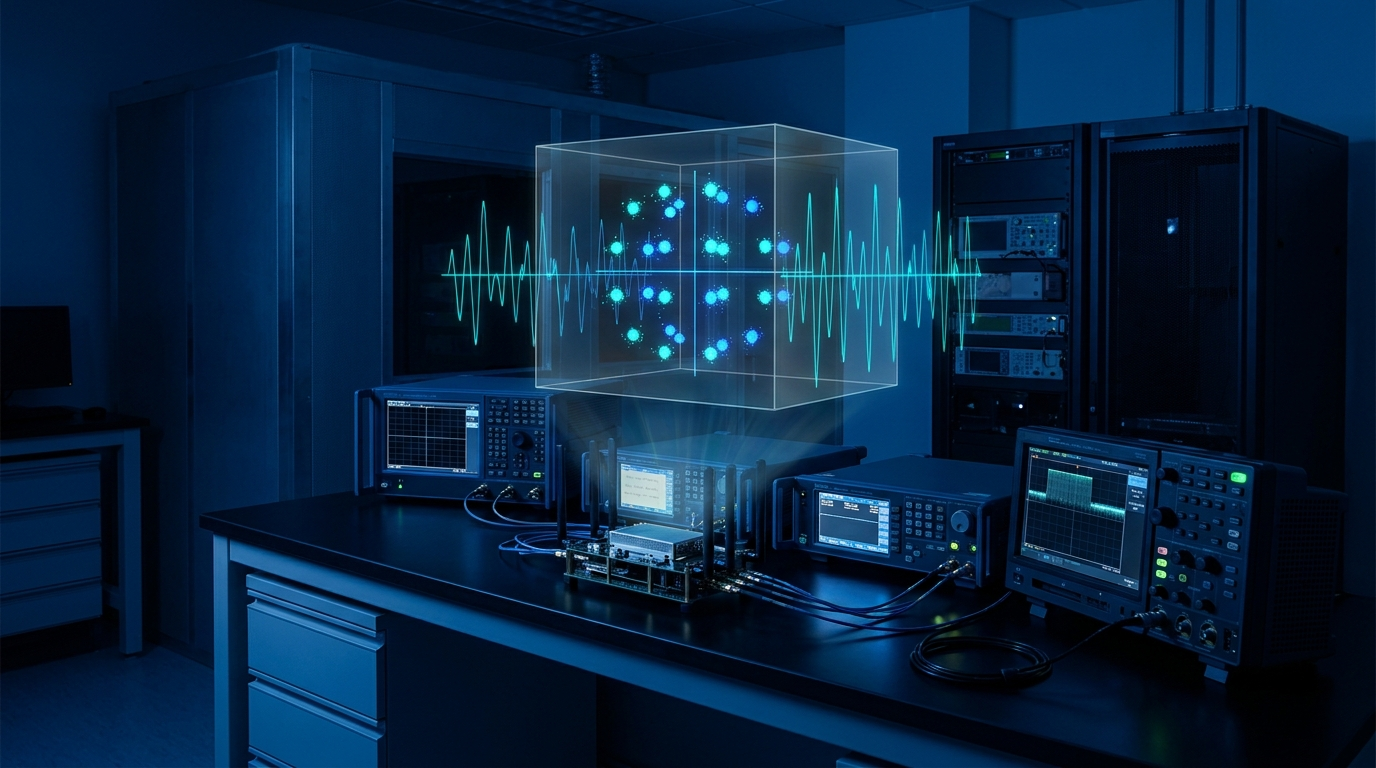
SpecICX-gen3 firmware adds digital demodulation across the common formats: QAM, PSK, and FSK. An operator can pull a constellation, read EVM, and inspect the symbol-level errors that point at the root cause, whether that is amplifier compression, phase noise, or a timing fault. Zero-span temporal measurements add the time dimension, holding a fixed frequency and watching power and modulation behavior down to the microsecond, which is where transient faults usually hide.
The decisive feature for intermittent bugs is record and playback. The ICX-FieldHawk line captures the raw IQ of an event so a fault that lasted a fraction of a second in the lab can be replayed, demodulated, and dissected as many times as it takes. Capture the failure once, and you can isolate it at leisure instead of chasing a problem you cannot reproduce.
Which models and accessories fit
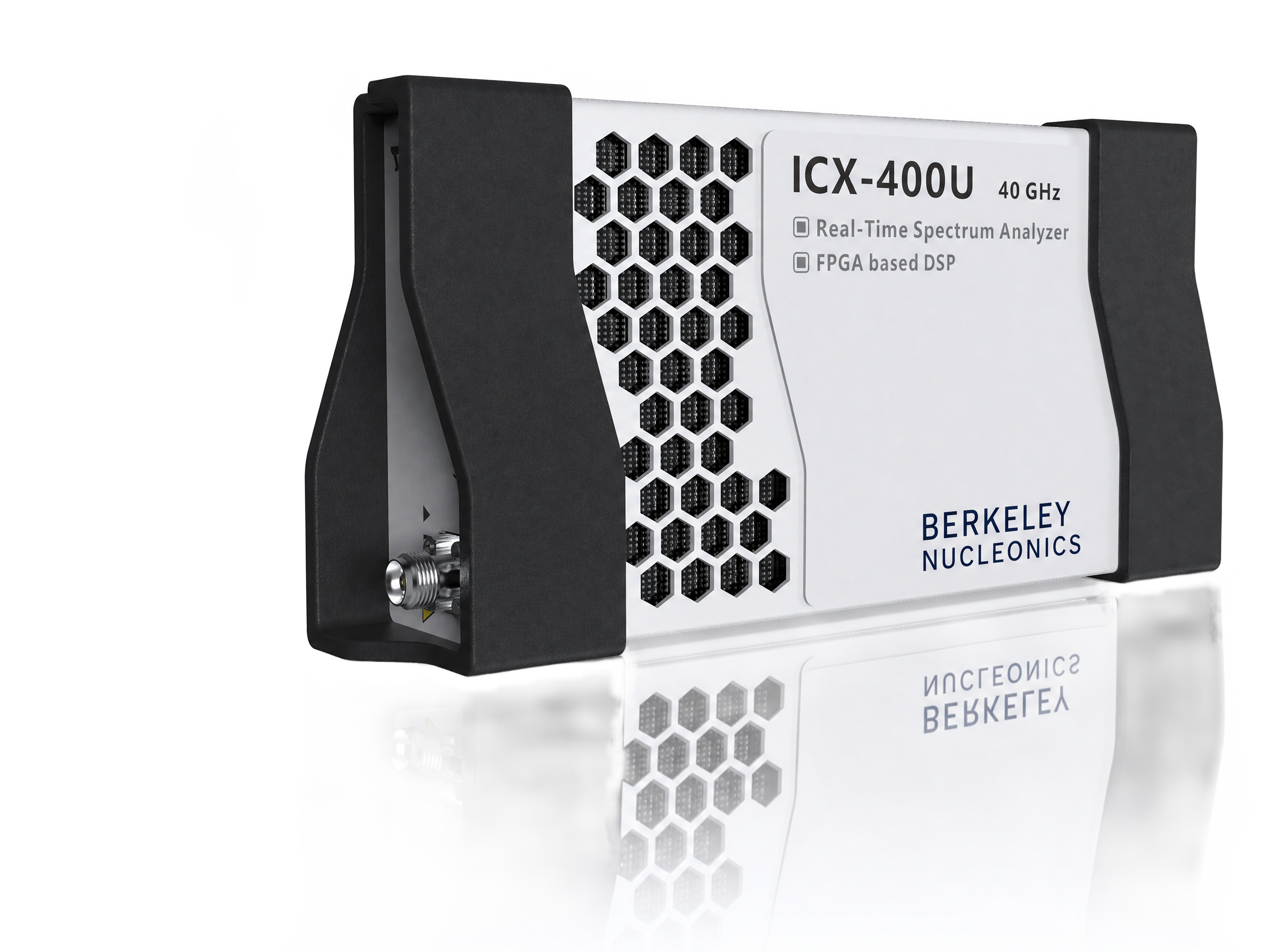
For lab and integration work, the ICX-FieldHawk-U USB core module is the natural fit. It drops into a workstation, an automated test setup, or an SDR-based development platform, exposing the full real-time engine and 100 MHz of analysis bandwidth through a programmable interface. With coverage extending to 40 GHz, it reaches the mmWave bands that 5G and emerging 6G research depend on, so a single core covers sub-6 GHz and millimeter-wave validation.
For bring-up at the antenna, on the production floor, or out at a live cell site, the ICX-FieldHawk handheld puts the same real-time analysis where the system actually runs. Engineers can verify a deployment, chase an over-the-air anomaly, or confirm a fix in the field without hauling a bench unit, then bring the captured IQ back for deeper analysis.
Where over-the-air work calls for directional reception, pair either unit with the ANT-100G antenna to isolate a signal of interest from a crowded band.
| Need | Recommended model | Why |
|---|---|---|
| Lab / ATE / SDR integration | ICX-FieldHawk-U | USB core, 100 MHz analysis bandwidth, mmWave to 40 GHz |
| Bench, line, and field bring-up | ICX-FieldHawk handheld | Same real-time engine where the system operates |
| Directional over-the-air work | ANT-100G | Isolate a signal of interest in a crowded band |
Recommended configuration
A capable validation kit centers on the ICX-FieldHawk-U with 100 MHz analysis bandwidth and coverage to 40 GHz for lab, ATE, and mmWave work, paired with an ICX-FieldHawk handheld for bench and field bring-up. Both run SpecICX-gen3 with wideband modulation analysis, EVM tracking, zero-span temporal measurements, digital demod, and IQ record and playback enabled. Add an ANT-100G for directional over-the-air capture. That setup covers wide-channel analysis, symbol-level debugging, and the transient-fault capture that intermittent errors demand.
For a quick question, chat with an engineer at berkeleynucleonics.com.