
1Overview
The Model 12100 Series is a family of compact, USB-powered RF average power sensors. They plug into a host computer and run with no external meter, no cable harness, and no manual zeroing or pre-use calibration. Setup takes minutes, so measurements start almost immediately whether the work happens on the bench or in the field.
Each sensor measures true-RMS average power across any modulation format, including 802.11ac, GSM, CDMA2000, IS-95, TDMA, OFDM, multi-tone, QAM, and CW. Coverage spans 9 kHz to 67 GHz with a dynamic range of -60 to +26 dBm, so the family reads both subtle and high-level signals with traceable accuracy. Patented thermal-stability technology holds readings steady over the full operating range without drift, and deep internal memory with internal or external triggering supports long-term logging.

2Model Selection
Eight variants set the frequency reach and connector. The S suffix is the Standard build starting at 1 MHz; the L suffix is the Extended build starting at 9 kHz. The 12154L and 12167L ship as Extended (L) only.
| Model | Frequency range | Power range | Standard connector |
|---|---|---|---|
| 12108S / 12108L | 1 MHz / 9 kHz to 8 GHz | -60 to +26 dBm | Type-N male |
| 12118S / 12118L | 1 MHz / 9 kHz to 18 GHz | -60 to +26 dBm | Type-N male |
| 12126S / 12126L | 1 MHz / 9 kHz to 26.5 GHz | -60 to +26 dBm | 3.5 mm male |
| 12140S / 12140L | 1 MHz / 9 kHz to 40 GHz | -60 to +26 dBm | 2.92 mm male |
| 12144S / 12144L | 1 MHz / 9 kHz to 44 GHz | -60 to +26 dBm | 2.4 mm male |
| 12150S / 12150L | 1 MHz / 9 kHz to 50 GHz | -60 to +26 dBm | 2.4 mm male |
| 12154L | 9 kHz to 54 GHz | -60 to +26 dBm | 2.4 mm male |
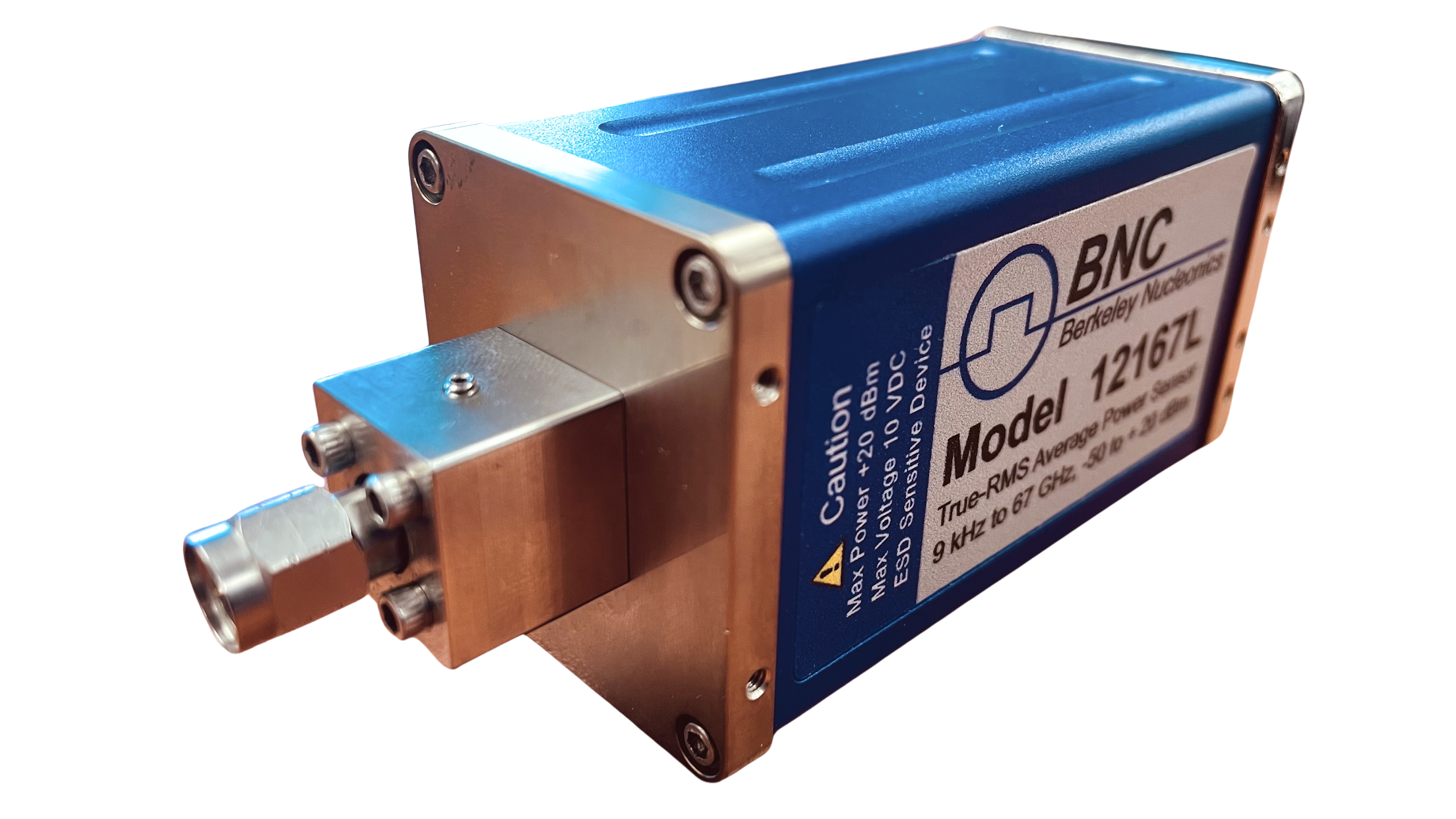
| 12167L | 9 kHz to 67 GHz | -50 to +18 dBm | 1.85 mm male |
S = Standard (from 1 MHz). L = Extended (from 9 kHz). The 12167L carries a reduced dynamic range and a lower continuous-average ceiling; see Specifications.
3Key Features
- True-RMS responding and modulation independent across all formats.
- USB plug-and-play operation: no zeroing, no pre-use calibration, no external meter.
- 9 kHz to 67 GHz coverage with a -60 to +26 dBm dynamic range.
- Patented thermal stability holds measurements steady with no drift over the full range.
- Full dynamic range processed with each sample.
- Interfaces: USBTMC and USB HID, with optional SPI or I2C TTL for direct and embedded control.
- IEEE 488.2 SCPI command set, command-compatible with the Agilent U2000 family.
- Extensive internal memory for trace capture and long-term logging.
- Real-time clock with backup, plus optional unattended autonomous operation (UOP).
- Security options: MIL (write-lock) and SEC (secure erase).
4Specifications
| Parameter | Specification |
|---|---|
| Frequency range | 9 kHz to 67 GHz (model dependent; S builds from 1 MHz, L builds from 9 kHz) |
| Dynamic range | -60 to +26 dBm (12167L: -50 to +18 dBm) |
| Continuous average power | +26 dBm / 400 mW (12167L: +18 dBm / 63 mW) |
| Damage level (CW) | +29 dBm / 800 mW (12167L: +23 dBm / 200 mW) |
| Peak power | +23 dBm / 200 mW (12167L: +26 dBm / 400 mW); damage +36 dBm / 4 W |
| Typical VSWR | <1.10:1 to <1.39:1 across the standard family; 12167L <1.43:1 at 67 GHz |
| Typical total RSS error | 1.09% to 2.87% (model and frequency dependent; 12154L up to 3.73% at 54 GHz) |
| Maximum DC input | 10 VDC (Low) or 16 VDC (Standard) on the RF input |
| Dimensions | 1.51 x 1.51 x 3.95 in (38.35 x 38.35 x 100.3 mm) |
| Connectors | Type-N, 3.5 mm, 2.92 mm, 2.4 mm, or 1.85 mm male (model dependent) |
| Operating temperature | 0 to 55 C (storage -25 to 85 C) |
| Humidity | 15% to 95% non-condensing |
| Interfaces | USB (USBTMC, USB HID), SCPI command set; optional SPI / I2C |
| Recommended calibration cycle | 1 year |

5PowerEye Software
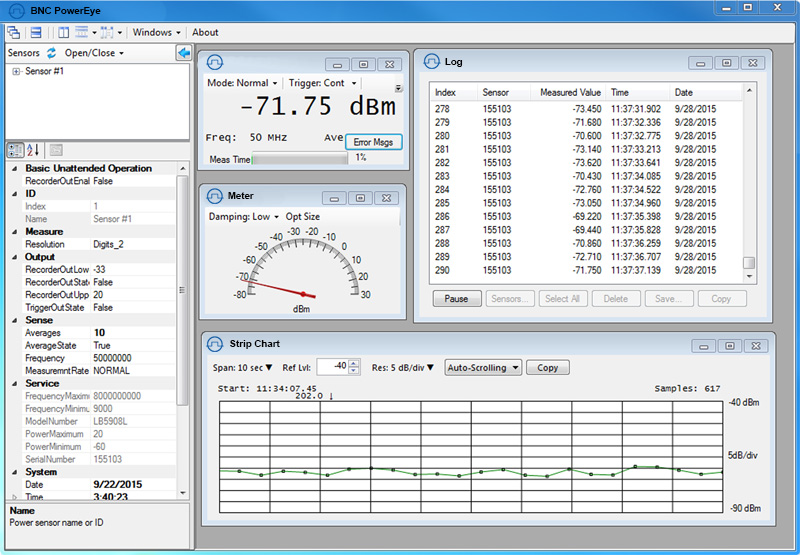
Every 12100 Series sensor ships with BNC PowerEye Precision Power Meter software. It installs quickly and runs a plug-and-play GUI that handles measurements from basic average power through complex triggered captures. A demo version is available online, and the software tools are free.
- Works with any 12100 Series sensor; USB threading speeds multi-sensor use.
- Two calculation windows for Gain, Loss, VSWR, Reflection Coefficient, Mismatch Loss, and Return Loss.
- Trigger control for level, delay, slope, hysteresis, and impedance.
- Tabular logging with file storage and retrieval, plus offset and frequency-dependent offset tables.
- Remote programming via the IEEE 488.2 SCPI command set, with support for LabVIEW, Python, and MATLAB environments.
6Applications
- Telecommunications transmitter and component power verification.
- Broadcast power monitoring and maintenance.
- Radar and satellite system test.
- EMC and pre-compliance measurement.
- Manufacturing and automated test equipment (ATE), including direct programmatic control.
- Research and development across the bench and the field.
7Ordering & Connectors
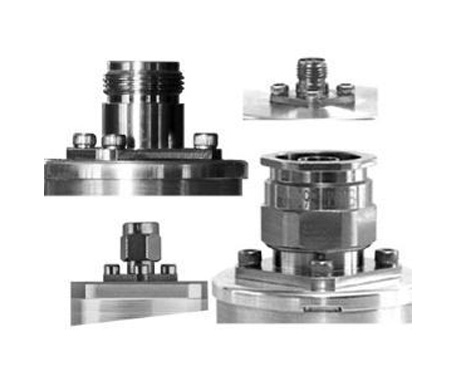
Specify the model number, which sets both the frequency reach and the standard connector. Choose the S build for coverage from 1 MHz or the L build for coverage from 9 kHz. Add options such as SPI / I2C, Analog Recorder Out (Option 001), Unattended Operation (UOP), and the MIL or SEC security options as the application requires.
| Model | Standard connector |
|---|---|
| 12108S / 12108L / 12118S / 12118L | Type-N male |
| 12126S / 12126L | 3.5 mm male |
| 12140S / 12140L | 2.92 mm male |
| 12144S / 12144L / 12150S / 12150L / 12154L | 2.4 mm male |
| 12167L | 1.85 mm male |
| Contact | Detail |
|---|---|
| info@berkeleynucleonics.com | |
| Phone | 800-234-7858 |
| Quote / demo | berkeleynucleonics.com/get-quote |