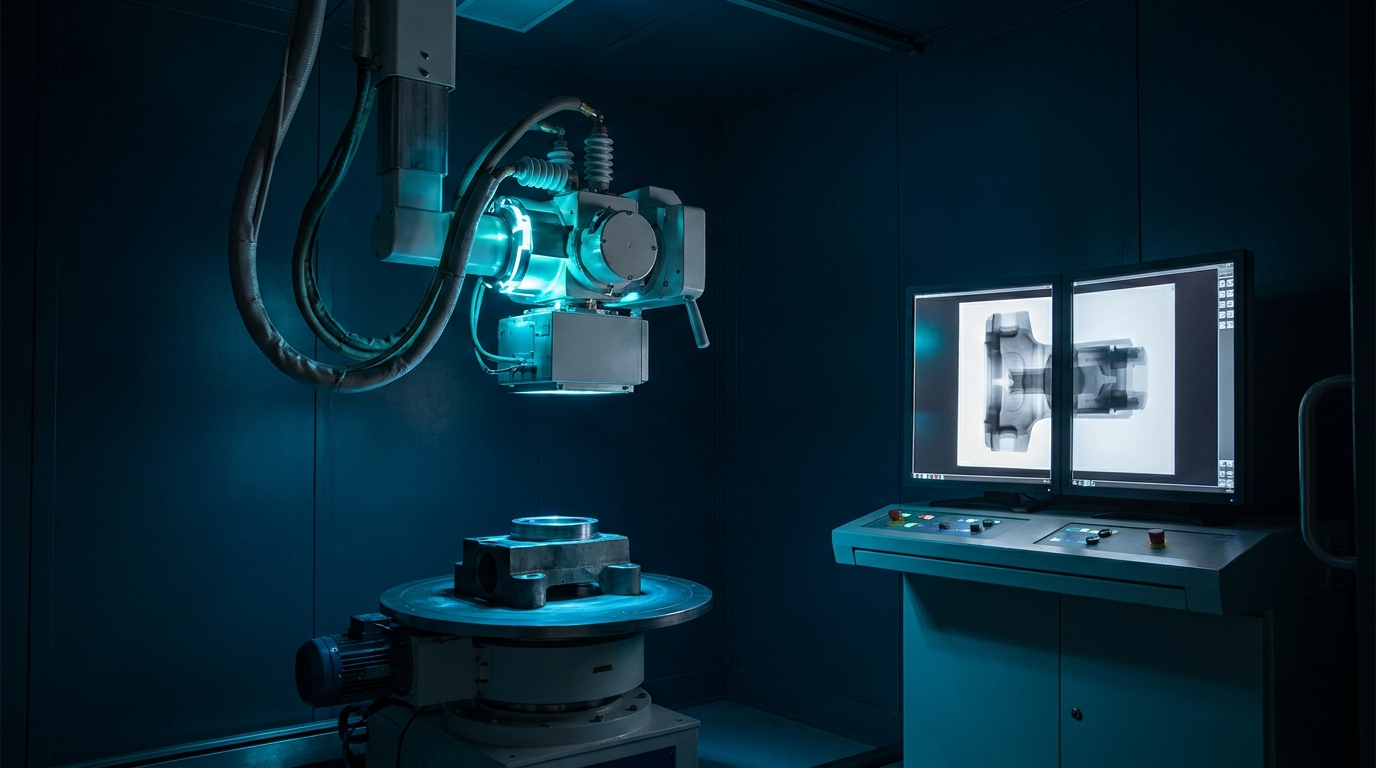
X-Ray Generation Systems
Almost every X-ray tube in industry runs on a high-voltage DC supply. The tube accelerates electrons across a potential of a few kilovolts to tens of kilovolts, and that potential sets the energy of the X-rays the tube produces. Industrial inspection lines, nondestructive testing benches, security screening systems, and analytical instruments such as X-ray fluorescence and diffraction all depend on it. In each of these, the picture or the measurement is only as good as the voltage behind the tube.
That is the part operators tend to underestimate. Ripple on the high-voltage rail spreads the energy spectrum the tube emits, which softens contrast and blurs the result. Drift over a measurement session shifts the contrast between one scan and the next, so a part that looked one way in the morning reads differently in the afternoon. For analytical work the effect is direct: a wandering tube voltage moves the excitation conditions and undermines the repeatability that quantitative XRF and diffraction depend on. The supply is not a utility on these systems. It is part of the measurement chain.
X-ray tubes also misbehave. Spark-downs and flashover events are a normal part of tube life, especially as a tube ages or when a fresh tube has not yet been conditioned. Each event dumps stored energy back toward the supply, and without fast protection that energy can damage the electronics driving the tube. A practical X-ray supply has to set voltage precisely, hold it quietly, bring the tube up gently, and survive the arc when it comes.
How the PVP-Series solves it
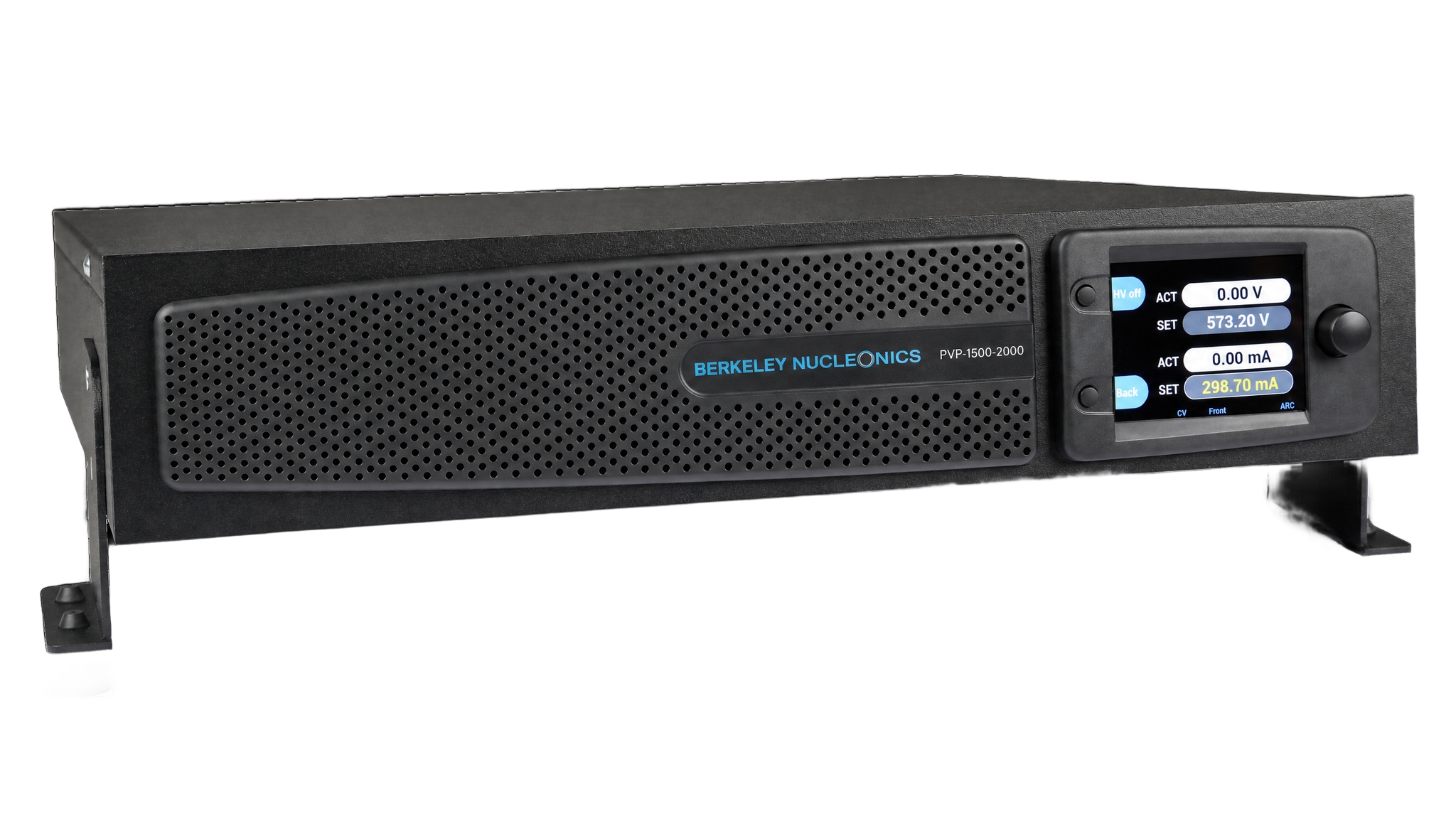
The PVP-Series is built to be the clean rail an X-ray tube needs. Each supply is fully digitally regulated with a microcontroller and FPGA, so the set voltage is held tightly rather than trimmed by analog drift. Line regulation is tighter than plus or minus 0.01 percent of nominal across a 10 percent mains swing, ripple is specified at 0.01 percent of nominal plus a small fixed term, and stability holds within 0.01 percent of nominal over an eight-hour session. A rail that quiet keeps the tube energy spectrum sharp, so the inspection image and the analytical line stay where they belong.
Setting the tube point is just as precise. The PVP-Series offers 16-bit setting resolution across roughly 0.01 to 100 percent of nominal, which lets an operator dial in a specific accelerating voltage and return to it exactly on the next run. Response is fast, settling to within 0.1 percent of nominal in under 1 millisecond, so an automated routine can step the tube to a new energy and begin acquiring without waiting on the supply.
Ramp Control brings the tube up at a defined gradient rather than a step. That matters twice over: it conditions a new or rested tube gently, working the voltage up so the tube seasons rather than shocks, and it protects the tube from the stress of an abrupt inrush. The gradient is adjustable from 1 V/s up to ten times nominal per second, so the conditioning profile fits the tube.
Arc Detection handles the spark-down. The supply watches for a flashover, reports it through the event log, and can shut the output off the instant it detects one, which keeps the energy of the event from reaching the electronics. Pair that with the time-tagged event log and an operator can see exactly when and how often a tube is arcing, which is a useful early signal that a tube is nearing end of life.
Control is automation-ready. Ethernet and RS232 with a standard SCPI command set let an inspection or analytical routine set the tube voltage, read status, and log every step from the same script that drives the stage, the detector, and the rest of the instrument. Rack the 2U enclosure into the system alongside the tube housing and control electronics.
Which PVP-Series models and options fit
Tube potentials in X-ray work usually run from a few kilovolts to about 30 kV, set by the tube and the technique. Negative polarity is common, since the high voltage is most often applied as a cathode bias.
| Need | Recommended PVP-Series model | Rating |
|---|---|---|
| Analytical and inspection tubes, current headroom | PVP-10000-300 | 10 kV, 300 mA, negative or reversible |
| Higher tube potentials, lower beam current | PVP-20000-25 | 20 kV, 25 mA, positive or negative |
| Highest tube potentials in the line | PVP-30000-17 | 30 kV, 17 mA, positive or negative |
For X-ray systems two options are not optional. Ramp Control is mandatory for tube conditioning, since stepping a cold tube straight to its operating voltage is exactly the abuse that shortens tube life. Arc Detection with output shut-off is mandatory for flashover protection, because spark-downs are a question of when, not if, and the supply is the first line of defense for the electronics behind the tube. Specify negative polarity where the tube takes a cathode bias.
Recommended configuration
For a general analytical or inspection bench working at tube potentials up to 10 kV, a PVP-10000-300 is the right center. It covers the voltage range those tubes use and carries enough current to drive the tube and hold the rail steady through a measurement. Specify negative polarity for a cathode-bias tube, and add both mandatory options: Ramp Control for conditioning and a gentle bring-up, and Arc Detection with output shut-off for flashover protection.
Systems that run higher tube potentials step up in voltage and down in current. A PVP-20000-25 covers tubes up to 20 kV, and the PVP-30000-17 reaches the top of the line at 30 kV, which is the highest tube potential the PVP-Series supports. In every case, drive the supply over Ethernet with SCPI from the same routine that controls the rest of the instrument, log the arc and event history, and rack the 2U unit into the system.
Talk to an application engineer
Berkeley Nucleonics can help you match a PVP-Series model and option set to your X-ray system. Call 800-234-7858 or email info@berkeleynucleonics.com.
For a quick question, chat with an engineer at berkeleynucleonics.com.