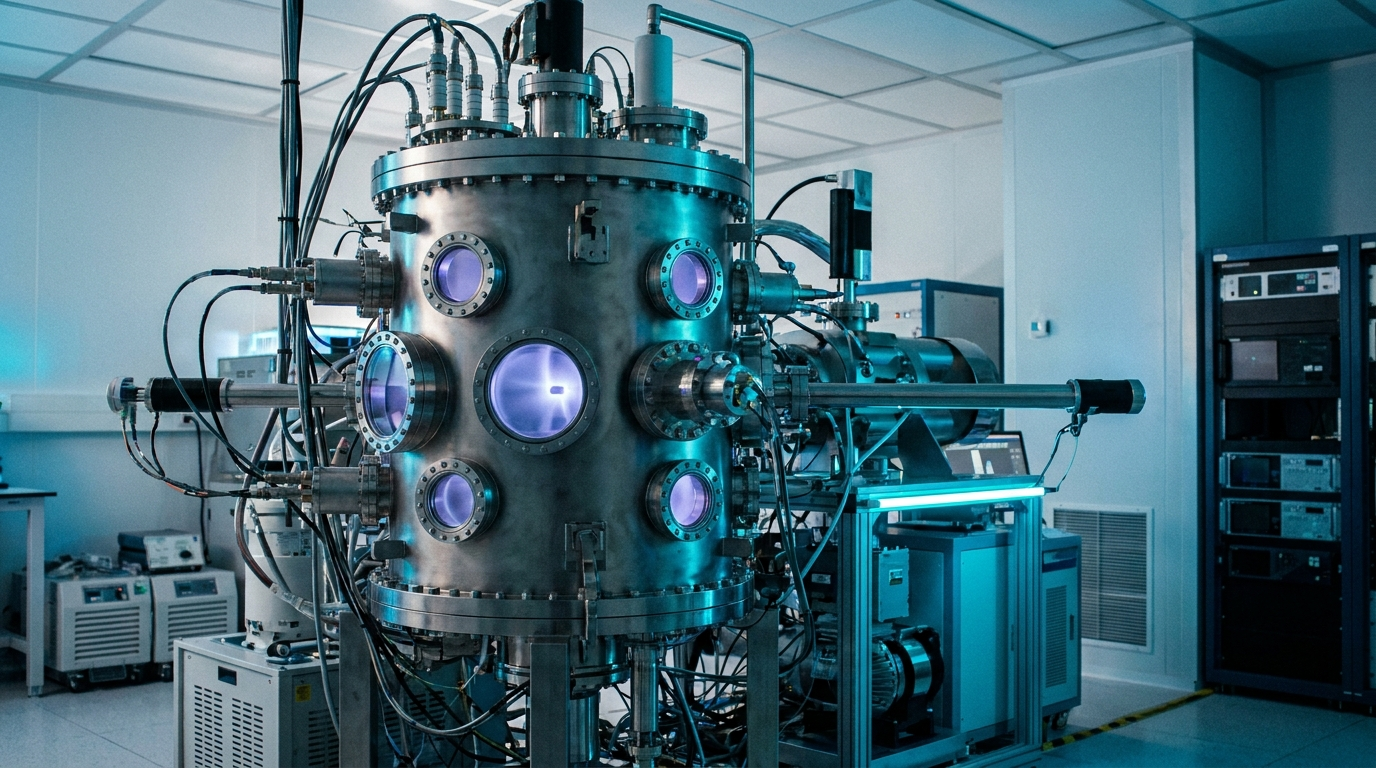
Electron-Beam & Ion-Beam Systems
Electron-beam and ion-beam systems all start from the same idea: take a charged particle, accelerate it through a high-voltage field, and focus it onto a target. The detail varies with the tool. Electron-beam welding, lithography, and evaporation pull electrons off a hot or field-emission cathode and drive them down a column. Ion implantation, focused ion beam, and ion-source work do the same with positive ions to dope a wafer, mill a cross section, or feed a downstream stage. In each case a stack of high-voltage electrodes does the accelerating and focusing, and the supply behind those electrodes sets how the beam behaves.
That makes high-voltage quality the quiet variable behind beam quality. Beam current, focus, and placement repeatability track the accelerating and extraction potentials almost one to one. Ripple on the rail modulates the beam energy and smears the focal spot. Slow drift over a shift shifts the implant energy or defocuses a written feature, so a tool that was in spec in the morning is out of spec by afternoon. The beam is only as steady as the voltage that forms it, which is why these systems treat the high-voltage supply as a precision instrument rather than a utility.
The electrodes themselves add their own demands. Beam sources and extraction electrodes are frequently referenced away from earth, so the supply has to float. Switching a column between an electron configuration and an ion configuration calls for reversible polarity. Electrodes need to be brought up cleanly rather than slammed to full potential, and vacuum flashovers between closely spaced electrodes are routine, so the supply has to see the arc, react, and recover without damaging the column or the rest of the rack.
How the PVP-Series solves it
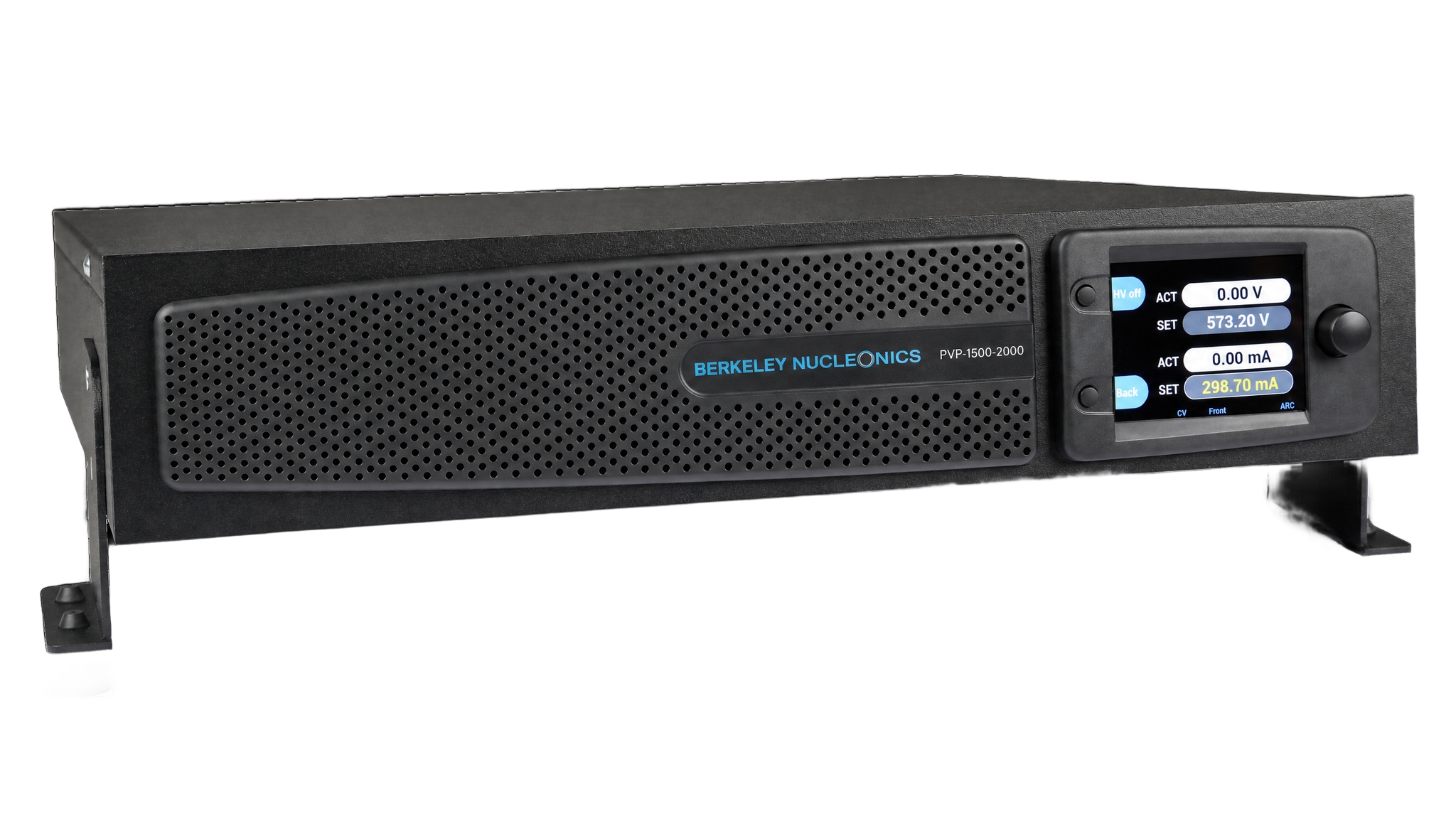
The BNC PVP-Series is built for exactly this kind of precision high-voltage duty. Each unit is fully digitally regulated with a microcontroller and FPGA, so the accelerating potential is held tight: line regulation is better than plus or minus 0.01 percent of nominal across a 10 percent mains swing, stability holds within 0.01 percent of nominal over an eight-hour run, and ripple is specified at 0.01 percent of nominal plus a small fixed term. A quiet, drift-free rail means the beam energy and focus you set in the morning are the same ones you have at the end of the shift.
Setting the operating point is just as precise. Voltage is set with 16-bit resolution across roughly 0.01 to 100 percent of nominal, fine enough to dial in an extraction or acceleration potential and step it in small increments for a focus or energy sweep. The supply responds to a command in under 1 millisecond to within 0.1 percent of nominal, so a recipe can move the beam to a new condition and proceed without waiting on the rail to settle.
The output suits real beam columns. Floating, potential-free versions let the supply sit on a source or extraction electrode that is referenced well away from earth, and reversible polarity lets the same hardware serve an electron configuration or an ion configuration. Ramp Control brings electrodes up at a defined gradient, anywhere from 1 V/s to ten times nominal per second, so the column comes up cleanly instead of in an inrush step. Arc Detection watches for vacuum flashover, reports it, and, with the output shut-off option, drops the rail the moment a flashover starts. That protects the column and the surrounding instrumentation and captures the event in the time-tagged log. Ethernet and RS232 with a standard SCPI command set let the tool controller own the recipe and read back state.
Which PVP-Series models and options fit
Beam tools span a wide range of potentials, from a few kilovolts on a focusing electrode to tens of kilovolts on a high-energy acceleration stage. The table below maps the common stages to the recommended PVP-Series model.
| Need | Recommended PVP-Series model | Rating |
|---|---|---|
| Floating source bias and focusing electrodes, high current | PVP-1500-2000 flo | 1.5 kV, 2000 mA, floating output |
| Mid-voltage focusing and source bias | PVP-5000-600 | 5 kV, 600 mA, reversible |
| Extraction and lower acceleration stages | PVP-10000-300 | 10 kV, 300 mA, reversible |
| Acceleration stages to 20 kV | PVP-20000-25 | 20 kV, 25 mA, pos/neg |
| Highest acceleration potentials in the line | PVP-30000-17 | 30 kV, 17 mA, pos/neg |
For beam work the two options that earn their place are Arc Detection and Ramp Control. Arc Detection with output shut-off is the front-line protection against the routine vacuum flashovers between electrodes; it drops the rail before the arc can do damage and logs the exact moment. Ramp Control brings the electrodes up on a controlled gradient, which is gentler on the column and gives a repeatable startup. Choose the floating variant for source bias and extraction electrodes that sit off earth, and the reversible variant where one column has to run electron and ion configurations.
Recommended configuration
A typical implant or focused-ion-beam column uses more than one supply, and the PVP-Series is meant to be combined that way. Put a PVP-10000-300 on the extraction or lower acceleration stage and a PVP-20000-25 on the main acceleration stage, stepping up to the PVP-30000-17 where the tool reaches the highest potentials in the line. For the floating source bias and the focusing electrodes, a PVP-1500-2000 flo gives a potential-free output with current headroom, and a PVP-5000-600 covers mid-voltage focusing and bias where more reach is needed.
Fit Arc Detection with output shut-off on every stage, since any electrode pair can flash over, and add Ramp Control so the whole column comes up on a clean, repeatable gradient. Drive each supply over Ethernet with SCPI from the tool controller so the accelerating, extraction, and focus potentials all move together under one recipe, and rack the 2U units into the tool frame beside the rest of the column electronics.
Talk to an application engineer
Berkeley Nucleonics can help you match PVP-Series models and options to the stages of your electron-beam or ion-beam column. Call 800-234-7858 or email info@berkeleynucleonics.com.
For a quick question, chat with an engineer at berkeleynucleonics.com.