High-Energy Physics & Synthesizer Diagnostics
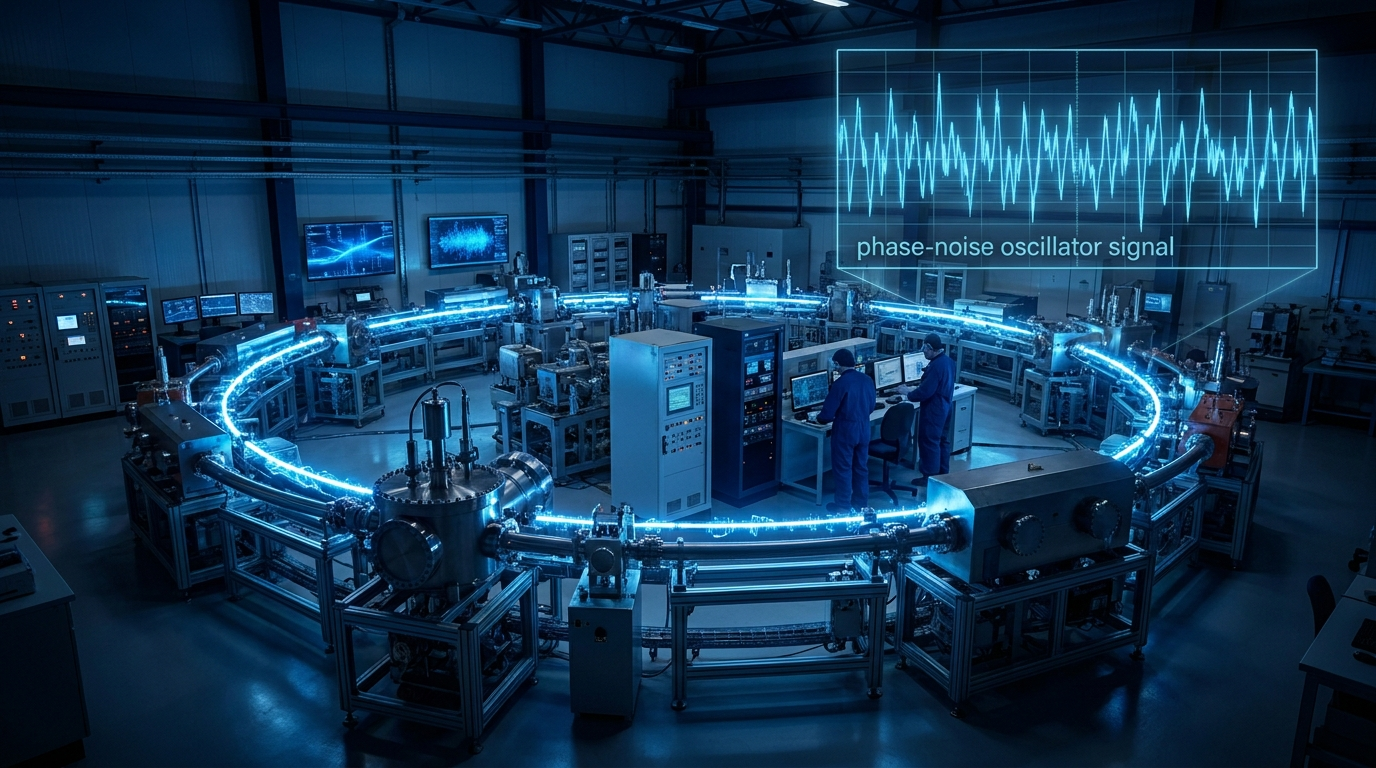
Precision instrumentation lives or dies on the quality of its reference signals. In a particle accelerator, the RF systems that bunch and steer the beam have to hold frequency and phase to extraordinary tolerances. A small drift in phase noise smears the beam. A frequency that hops when it should hold disrupts the timing that keeps a fill stable. The signals that report on all of this are clean, narrow, and unforgiving: the interesting behavior is often a faint sideband sitting close to a strong carrier, or a brief excursion that lasts only as long as a fault.
The same exacting standard applies on the bench. A voltage-controlled oscillator or a frequency synthesizer is judged by how quietly and how stably it produces a tone. Phase noise close to the carrier sets the limit on everything downstream, and a synthesizer that hops between frequencies has to settle fast and land clean. Measuring this honestly means resolving a weak skirt next to a strong line and watching a hop happen in real time, not reconstructing it after the fact.
A swept analyzer struggles with both. It looks at one slice at a time, so a frequency hop or a transient instability can occur entirely between sweeps. For work where the event you care about is short and the signal you care about is faint, that is the wrong tool.
How the ICX-FieldHawk line solves it
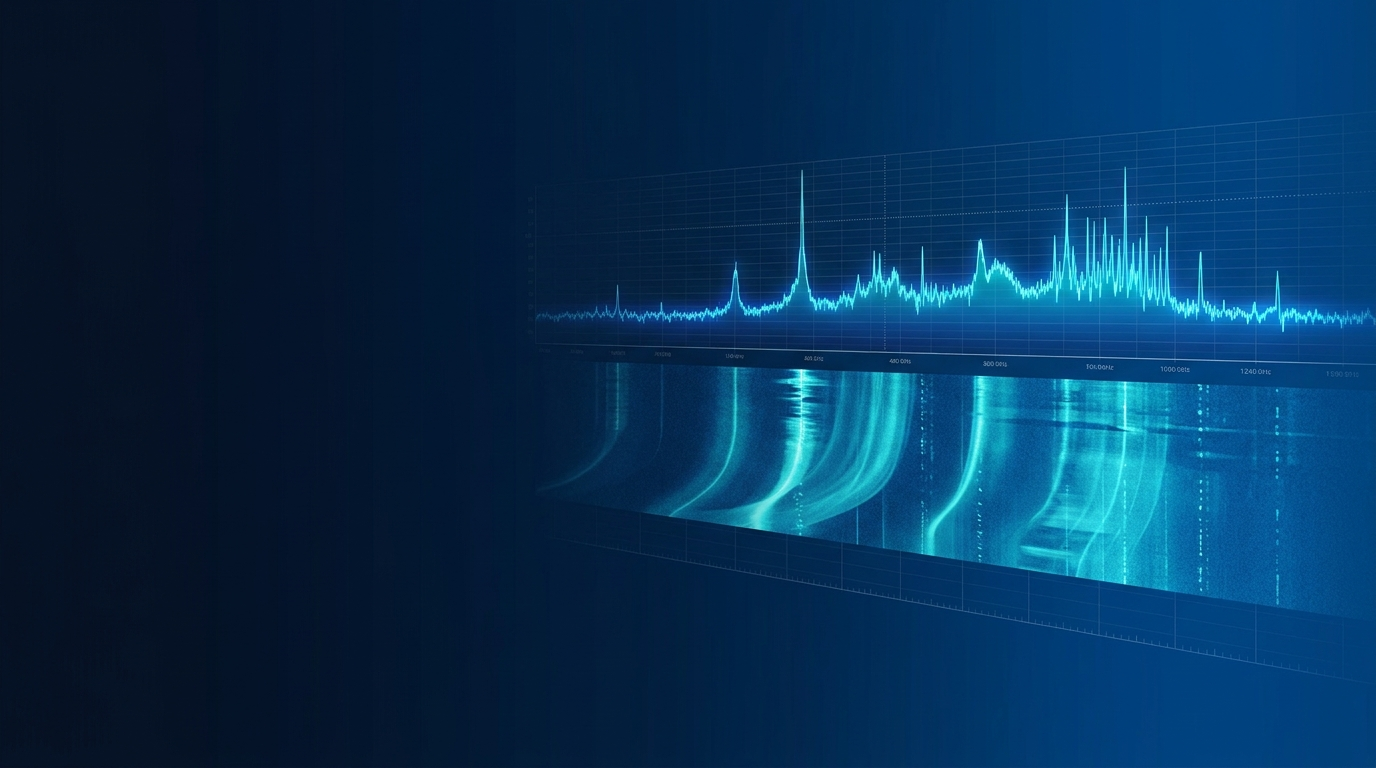
The ICX-FieldHawk receivers analyze in real time, holding the whole span under continuous observation rather than stepping across it. For beam diagnostics and synthesizer test alike, that means a frequency hop is captured as it happens and a transient instability leaves a visible trace instead of vanishing in a sweep gap. The persistence display separates the steady carrier from the rare excursion, so a brief glitch in an otherwise stable signal stands out clearly.
SpecICX-gen3 firmware adds automatic phase-noise measurement. Rather than building a phase-noise plot by hand, an engineer reads the carrier and the noise skirt directly, with the close-in behavior that sets the performance limit resolved against the strong central line. For VCO and synthesizer characterization, that turns a tedious procedure into a measurement you can repeat across a production run. The same real-time engine captures frequency-hop behavior, so settling time and landing accuracy are visible in the moment.
This is familiar ground for Berkeley Nucleonics. The company has built precision timing and signal instrumentation since 1963, and the ICX-FieldHawk line carries that heritage into a real-time analyzer that physics labs and synthesizer designers can trust on the bench and in the tunnel.
Which models and accessories fit
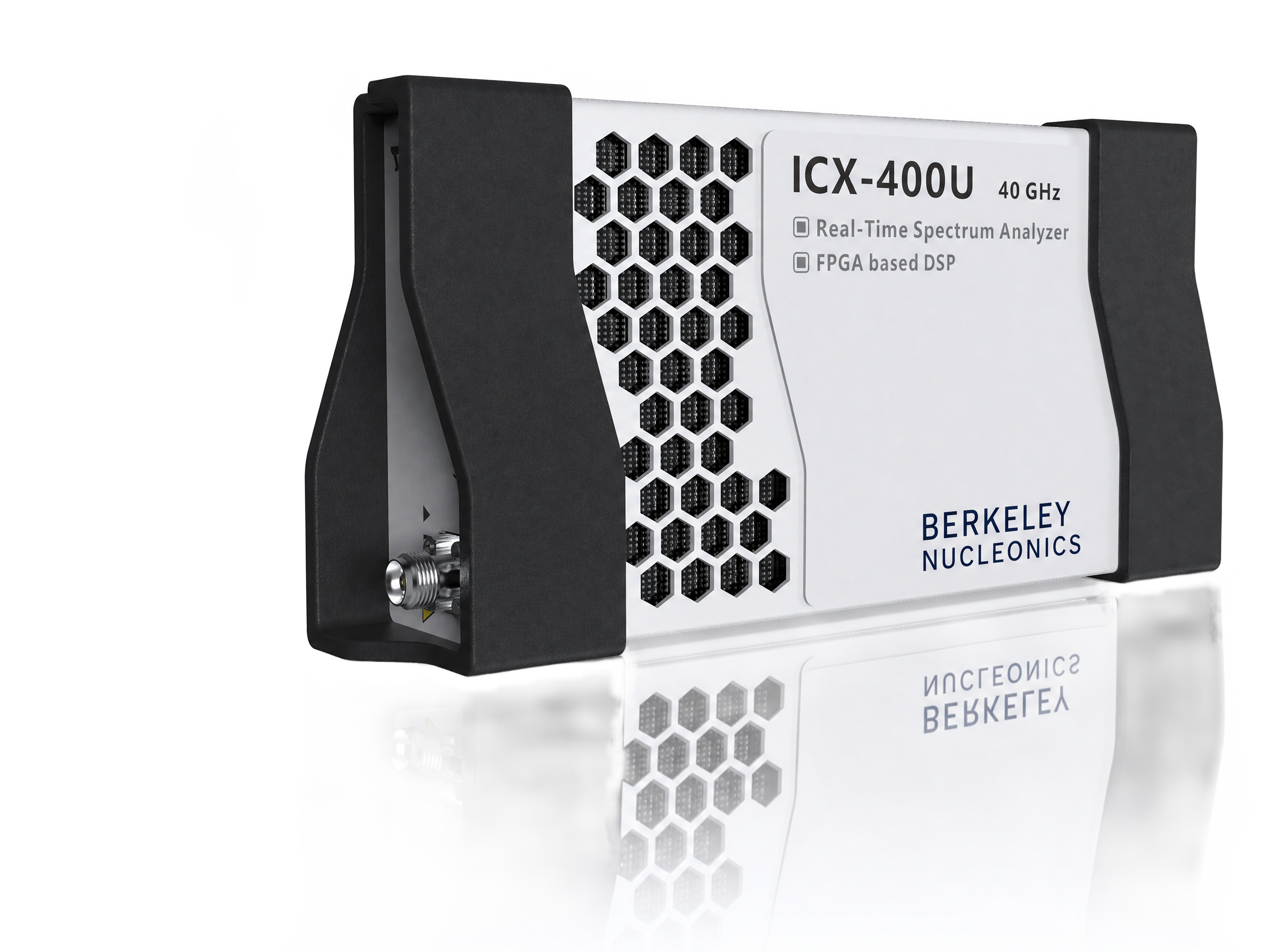
For lab and accelerator-facility work, the recommended platform is the ICX-FieldHawk-U USB core module. It integrates into a workstation, a control rack, or an automated synthesizer test station, exposing the full real-time engine and the automatic phase-noise tools through a programmable interface. That makes it straightforward to fold into an existing measurement chain or a scripted production test, with coverage extending into the microwave bands where modern synthesizers operate.
For walk-up measurements at the rack, in the tunnel, or anywhere a fixed station does not reach, the ICX-FieldHawk handheld brings the same real-time analysis and phase-noise capability to the point of work. An engineer can verify a reference, check a hop, or chase an instability on the spot, then carry the result back for deeper analysis. Between the two, a facility covers both the scripted bench and the hands-on field check with one consistent measurement engine.
| Need | Recommended model | Why |
|---|---|---|
| Lab / facility / ATE integration | ICX-FieldHawk-U | Real-time engine with automatic phase-noise tools, programmable |
| Walk-up checks at the rack or tunnel | ICX-FieldHawk handheld | Same analysis and phase-noise capability at the point of work |
Recommended configuration
A strong diagnostics kit pairs the ICX-FieldHawk-U for bench, facility, and automated synthesizer test with the ICX-FieldHawk handheld for walk-up checks, both running SpecICX-gen3 with automatic phase-noise measurement, real-time spectrum, and frequency-hop capture enabled. That combination covers close-in phase-noise characterization, beam-stability monitoring, and hop settling, on a scripted bench and out at the rack, with the precision Berkeley Nucleonics has stood behind since 1963.
For a quick question, chat with an engineer at berkeleynucleonics.com.